Before every question could be answered with a quick online search, our imaginations were fueled by folklore, urban legends, and myths passed down through generations. Monsters lurking in the woods, UFO sightings in remote fields, creatures hiding just beyond the tree line—these stories fascinated us because they left room for wonder. They reminded us that perhaps there were still dark corners of the world that science couldn’t explain.
For many, The X-Files helped shape that fascination. The Canadian-produced series invited audiences to question everything, blending paranormal mysteries with real-world fears and cultural anxieties. As children, the stories were simply creepy. Looking back, they were also about our need to believe that something larger—whether terrifying or extraordinary—might exist just beyond our understanding.
Even though many of those mysteries remain unsolved, the questions never really disappear. Is the government hiding the truth? Are these stories deliberately kept alive to distract us from more pressing issues? We’ll probably never know. What we do know is that the mystery itself is part of the appeal. Sometimes, maybe the only way to chase those unanswered questions is to pack your bags and set off on an adventure.
Matt Kincses’ Sawtooth Mountain taps into that same curiosity, though not in the way I expected. What initially appears to be a straightforward Bigfoot slasher quickly reveals itself to be a dark satire about the cost of keeping a local legend alive.
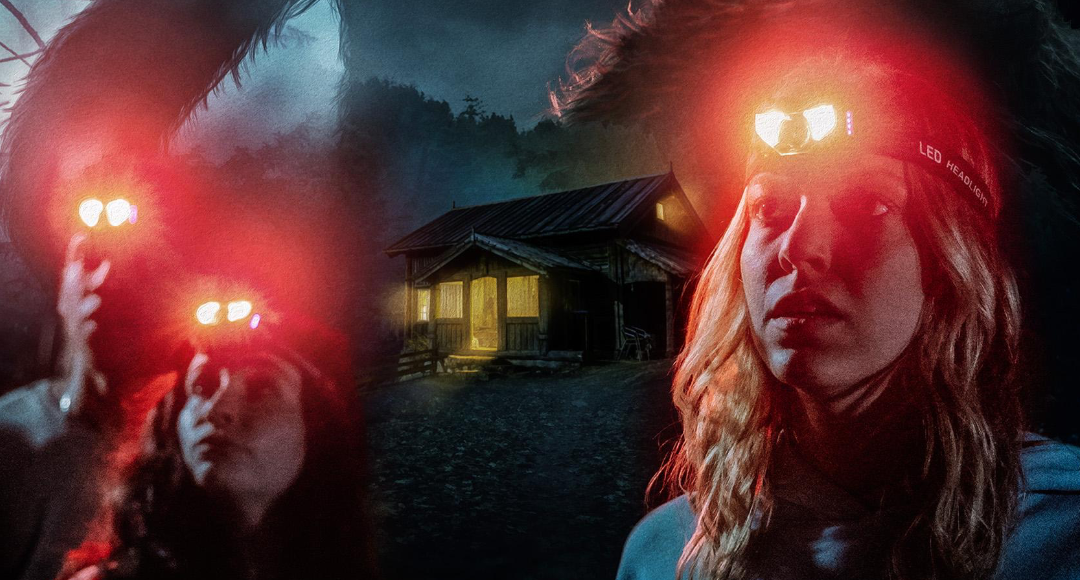
The film follows three college friends—Kiera (Sydney Scotia), Dillon (Jude Wilson), and Liv (Matreya Scarrwener)—who spend a weekend at Bigfoot Hollow, an isolated cabin resort built around the promise of spotting the legendary creature. Surrounded by dense forests and miles away from civilization, it’s exactly the kind of place designed to attract thrill-seekers chasing an unforgettable experience.
Running the attraction are brothers Bobby (Landon Liboiron) and Clint (Gabriel Carter), who are desperately trying to keep their struggling business afloat. In today’s world, however, survival isn’t just about offering a unique destination. Online reviews, social media, and word of mouth can make or break a business overnight, and Bigfoot Hollow is slowly losing its appeal.
Bobby dreams of expanding his empire by purchasing nearby land rumored to be a hotspot for UFO activity, hoping to transform the area into an even bigger paranormal destination. But after the bank refuses his loan application, that dream begins to look increasingly impossible. If he wants to preserve everything they’ve built, he may have to cross moral lines.
The screenplay cleverly balances two parallel storylines. On one side are the brothers, struggling to manufacture excitement and keep tourists coming through the gates. On the other are three young visitors who simply want a weekend of drinking, partying, and escaping reality.

While the college students initially seem like familiar genre archetypes—Gen Z partygoers fueled by alcohol, loud music, and the usual cabin in the woods clichés—they also represent something far more valuable to the brothers: the perfect opportunity to stage a publicity stunt.
The two narratives inevitably collide during a guided excursion into the forest. Clint enthusiastically shares stories about Bigfoot, local myths, and unexplained encounters, hoping to spark wonder in his guests. Instead, he’s met with eye rolls and indifference from the trio, who treat the experience as little more than a joke.
Their skepticism only makes the eventual encounter all the more effective. Whatever they expected to find, something is waiting for them—and it’s enough to force them to reconsider everything they dismissed.
What follows is where Sawtooth Mountain becomes far more interesting than a conventional creature feature. After what initially seems like a successful visit, Bobby and Clint believe they’ve finally created the kind of unforgettable experience that will put Bigfoot Hollow back on the map. But when Kiera uncovers the truth behind the attraction, the film shifts into a tense conflict between furious customers who realize they’ve been deceived and two brothers willing to protect their livelihood at any cost.
Rather than simply dropping Bigfoot into an already familiar horror setup, Sawtooth Mountain explores something far more compelling: how far people are willing to go to preserve belief itself.
In an era where every mystery is only a few clicks away from being explained, legends have become commodities, sold as experiences rather than possibilities. Sawtooth Mountain argues that keeping those myths alive sometimes requires sacrifices far more monstrous than the creatures said to hide in the woods.
Even though it never descends into full-blown B-movie territory, Sawtooth Mountain still knows when to have fun. The film embraces its campier side, particularly through its Bigfoot design, inviting the audience to laugh along with it. Yet that humor is balanced by an effective contrast: there is an unsettling presence behind it, transforming what initially feels ridiculous into something genuinely disturbing.
Don’t go into Sawtooth Mountain expecting an all-out bloodbath. While the film isn’t relentlessly gory, it still delivers a surprisingly high body count along with several genuinely suspenseful sequences.
Performance-wise, Gabriel Carter fully commits to Clint, a Bigfoot-obsessed eccentric who constantly walks the line between awkward innocence, unsettling creepiness, and outright psychopathy. Opposite him, Landon Liboiron brings a more grounded approach to Bobby, whose stubborn determination and increasingly desperate decisions make the brothers’ relationship the true backbone of the film.

Sydney Scotia, as the film’s final girl, takes on the most physically demanding performance of the cast. Whether she’s being chased through the wilderness, restrained against her will, or forced to witness Bigfoot’s brutal attacks firsthand, Scotia convincingly carries the film’s escalating tension. Meanwhile, Jude Wilson and Matreya Scarrwener bring plenty of natural chemistry to their roles, making the trio feel like believable friends rather than just disposable horror archetypes.
The film also serves as an invitation to immerse yourself in the very landscapes that helped shape the legend of Bigfoot. Shot amidst the breathtaking wilderness of British Columbia, Sawtooth Mountain makes excellent use of its natural surroundings, creating an atmosphere where every towering tree and secluded trail feels like the perfect hiding place for something unknown. The scenery is as beautiful as it is intimidating.
I had a genuinely fun time with Sawtooth Mountain. The film embraces its humor without hesitation while allowing its characters to defend their own perspectives in a story built around two sides of the same conflict. It delivers effective moments of suspense, along with creative choices in how it reveals—or deliberately hides—its violence, avoiding the kind of gratuitous approach that could have easily overshadowed the story in another film.
Don’t miss your chance to experience Bigfoot Hollow for yourself. Sawtooth Mountain arrives on Tubi August 11.
Leave a Reply