As a ‘90s kid, some of my earliest introductions to horror and science fiction came through Canadian television. Growing up in Mexico, I was lucky enough to have cable, which meant spending countless afternoons watching Goosebumps and Are You Afraid of the Dark? Those series weren’t just gateways into the genre—they shaped the way I understood storytelling.
On the surface, they delivered spooky monsters and eerie mysteries designed for younger audiences. But beneath the scares were stories about friendship, identity, family, empathy, and the eternal struggle between good and evil. Their bold colors, practical effects, and unmistakable ‘90s aesthetic created a world that felt imaginative rather than cynical. It’s a style of genre filmmaking that has quietly disappeared, and one I didn’t realize how much I missed.
It’s been years since a film transported me back to that feeling—until Home Bodies.

Marking Casey Walker’s return to feature filmmaking since A Little Bit Zombie (2012), one of Canada’s hidden gems of indie horror comedy, Home Bodies represents a fascinating creative evolution. Walker trades slapstick chaos for restrained mystery, crafting a retro-futuristic fairy tale that feels nostalgic without relying on nostalgia alone. While its visual language immediately recalls the children’s horror television that defined my childhood, its ideas are far more unsettling and emotionally complex.
Rather than offering easy explanations, Home Bodies invites its audience to sit with uncertainty. By the time the credits rolled, I found myself with more questions than answers—a rarity in modern genre cinema, and one of the film’s greatest strengths.
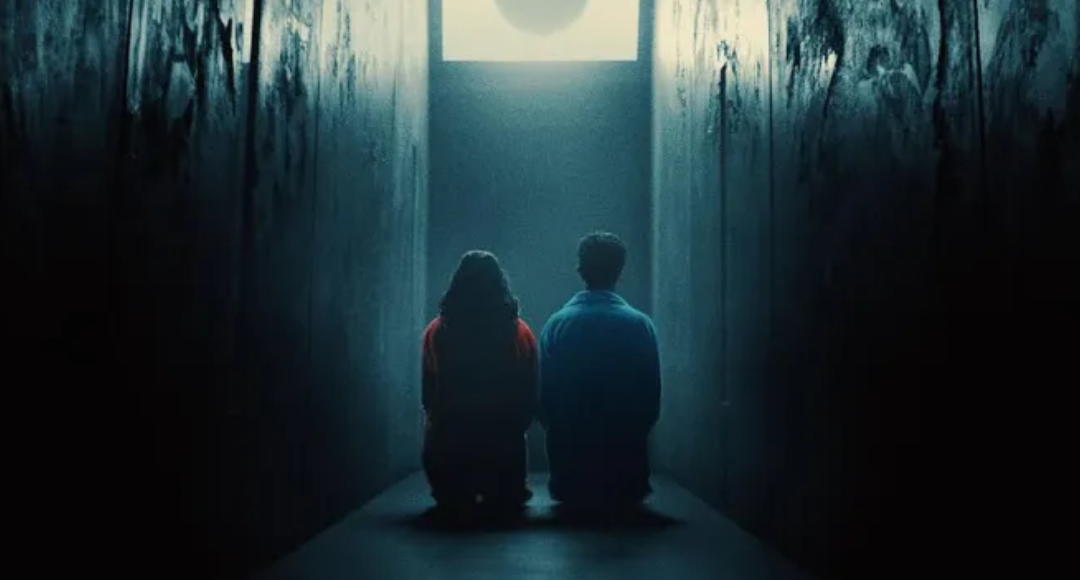
The story follows Red and Blue, played with remarkable chemistry by real-life twins Emma and Ian Ho. Raised inside an isolated automated house, their lives revolve around an endless routine: eat three meals a day, take out the trash, watch VHS tapes of a puppet television program called The Barn, and, above all, take care of one another.
From the beginning, Walker establishes the siblings as opposites. Red has reached the age where curiosity begins to outweigh obedience. She questions the world around her and grows increasingly frustrated with the monotony of their existence. Blue, meanwhile, finds comfort in routine. He meticulously maintains the house, follows every rule without hesitation, and clings to the structure that defines his reality.
Like any home, however, this one operates under strict rules—and every broken rule carries consequences.

The children’s only connection to the outside world comes through a narrow hallway illuminated by a bright light and an unseen voice they know simply as Papa. Acting as both father figure and unquestionable authority, Papa dictates the rules of the house, rewarding obedience and punishing disobedience. The scars on Blue’s hand serve as a haunting reminder that these punishments are very real.
Walker captures the sibling relationship with surprising authenticity. Their affection is genuine, but so are their frustrations. Red’s desire to break free from routine constantly clashes with Blue’s need for order, creating tension that feels natural rather than manufactured. Even an innocent game of catch spirals into conflict after a broken window violates one of Papa’s sacred rules.
The fragile balance of their world is permanently disrupted on Christmas morning when Papa delivers a mysterious gift: Pal (Ess Hödlmoser), an androgynous child who is meant to become the siblings’ new responsibility. Quiet, expressionless, and deeply unsettling, Pal immediately alters the emotional dynamic within the house.
What begins as curiosity slowly gives way to jealousy, resentment, fear, and the anxiety of being replaced. As Red and Blue struggle to define their roles within this new family structure, Walker transforms a seemingly simple premise into a disturbing meditation on control, identity, society and awakening.
Pal not only captures Red’s attention but also exposes her to a forbidden VHS tape filled with disturbing imagery—visions that challenge everything she has been taught to believe about the world beyond the house. For Red, it’s the first glimpse of a reality that exists outside Papa’s carefully constructed routine.
When Blue discovers what Pal has done, he sees it as a direct threat to the fragile order that has governed their lives. Determined to preserve the rules at all costs, he takes matters into his own hands. What follows is an act of shocking cruelty that reveals just how deeply Papa’s conditioning has taken root, turning Blue’s desperate need for order into something profoundly unsettling.
Much like The Matrix, Home Bodies presents Red and Blue as two opposing philosophies of how we choose to exist within society. Blue embraces the comfort of certainty, accepting the rules as absolute and finding security in the life that has been designed for him. Red, on the other hand, is driven by curiosity, willing to risk everything in pursuit of truth—even if it means confronting a reality she may not be prepared for.
Their automated home provides everything they could seemingly ever need: food, shelter, routine, and purpose. Yet beneath that comfort lies an unsettling question. Is it truly a home, or simply a beautifully constructed prison? What exists beyond the locked door? And why has Pal been brought into their lives?
Walker wisely resists offering straightforward answers. Instead, he invites the audience to explore this artificial Eden alongside the children, allowing its mysteries to unfold naturally. Whether every question receives an answer is almost beside the point.

The film is far more interested in examining the choices Red and Blue make than in providing concrete answers. At its core, Home Bodies explores the decision to remain within the safety of the world you’ve always known or to step beyond it in search of something greater—even if that means sacrificing the comfort and certainty you’ve been taught is enough.
One of the aspects that fascinated me most about Home Bodies is Casey Walker’s world-building. During the long gap between his features, Walker produced In a Violent Nature—one of my favorite films of 2024—and looking through his IMDb credits, it becomes clear that he’s no stranger to children’s television. That experience feels embedded in every frame of Home Bodies, informing its playful surface while subtly amplifying its unsettling undercurrents.
The production design is nothing short of exceptional. Every corner of the house feels meticulously crafted, from its retro-futuristic architecture to its vibrant color palette, blinking lights, analog technology, and spaceship-like soundscape.
The set becomes a character in its own right, evoking both the comforting familiarity of classic children’s programming and the quiet unease of an environment built around absolute control. It’s a space that never loses its visual appeal, constantly rewarding the audience with small details while reinforcing the film’s central themes of routine, isolation, and confinement.
After more than a decade away from feature filmmaking, Casey Walker returns with a film that more than justifies the wait. Home Bodies feels like the culmination of the experiences he’s gathered throughout his career, blending his background in children’s television with his sensibilities as a genre filmmaker to create something that is both nostalgic and uniquely his own.
If Home Bodies is any indication of where Walker is headed creatively, then his future looks incredibly promising. It has certainly heightened my anticipation for Ithaqua, his next feature, which is set to premiere later this year.
Leave a Reply