Queer voices have always been woven into horror’s DNA. Whether explicit or coded through metaphor, same-sex desire has long found a home within the genre. Gothic fiction and early vampire mythology, in particular, offered some of the earliest literary spaces where queerness could exist, even if it had to hide behind monsters and the supernatural.
Yet many of the writers who shaped that legacy remain largely known. Some were pushed into obscurity, others exiled or silenced for the very courage that defined their work and their activism.
That was the first thing that caught my attention about No Rest for the Wicked. The film is adapted from Manor, an 1884 short story by German gay rights pioneer Karl Heinrich Ulrichs. Set in the Faroe Islands, the tragic same-sex love story is widely recognized as one of the earliest works to intertwine vampire mythology with homosexuality—an extraordinary piece of queer horror history that deserves far greater recognition.
Nearly 150 years later, the fight is far from over. Freedoms that many take for granted—self-expression, sexuality, and the right to exist openly—continue to be challenged. As society takes alarming steps backward, authentic queer representation feels more vital than ever.
Thankfully, Kasper Kalle’s adaptation of Manor arrives as both a haunting period piece and a timely reminder. It lays bare the devastating consequences of politics, religion, and rigid social norms on young queer lives, underscoring how prejudice can be just as monstrous as anything lurking in the shadows.
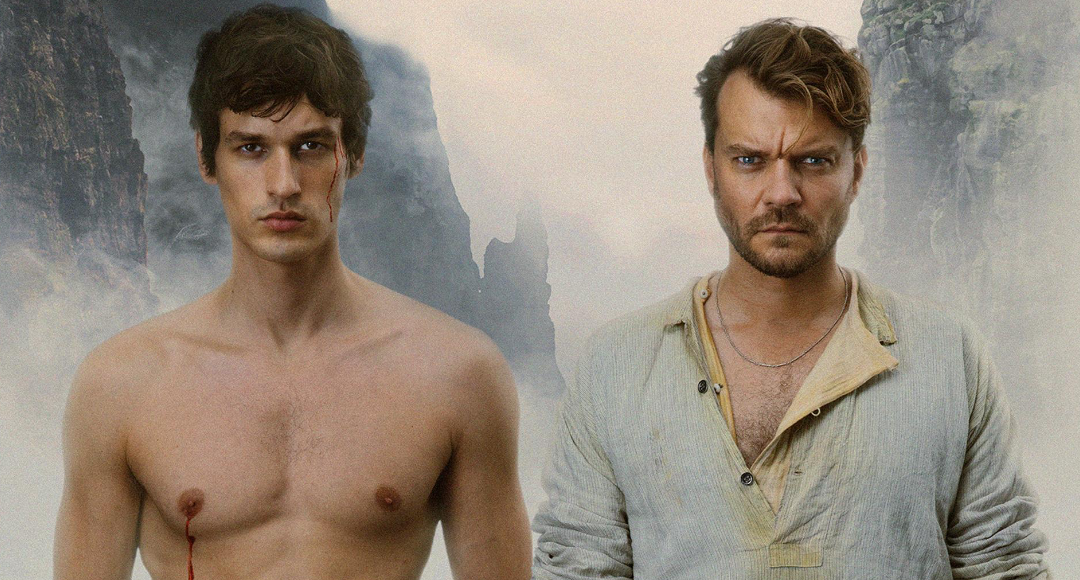
Set in 1862, No Rest for the Wicked follows Baldur (Egor Venned), a young man living a quiet fisherman’s life on the remote Faroe Islands, a windswept archipelago isolated in the northern Atlantic Ocean.
Baldur’s world is defined by simplicity and routine, shared mostly with his fiercely protective mother, Asla (Sofia Nolsøe). But that fragile balance is disrupted when Helge (Pilou Asbæk), a rugged whaler passing through the islands, arrives and awakens emotions Baldur has never been allowed to explore.
After Helge rescues Baldur from drowning, an unexpected connection begins to form between them. Their bond develops gradually, as Baldur becomes captivated not only by Helge’s affection, but by his knowledge of a world beyond the boundaries of his homeland.
When Helge’s time on the islands comes to an end, Baldur makes the courageous decision to follow him into the unknown. However, his mother’s control and the weight of the society surrounding them force him to remain behind.

When tragedy strikes, their forbidden love unleashes supernatural forces that terrify the community, pushing the villagers to confront what they perceive as evil. But Baldur and Helge refuse to allow their love to be erased or buried. Their fight becomes a defiance against fear, oppression, and the forces determined to keep them apart—one that will continue beyond life itself.
Kasper Kalle delivers an outstanding achievement, transporting audiences back to the 19th century with a meticulously crafted period piece that feels both authentic and immersive. No Rest for the Wicked is a film that is equally compelling and terrifying, with horrors that do not simply appear on screen—they seep under the skin.
A haunting blend of forbidden romance and blood-soaked creature feature, the film speaks a universal language. Beneath its supernatural elements lies a reflection of society’s deepest fears: the fear of difference, repression, and the consequences of denying human connection. Kalle masterfully balances horror and romance, creating a story where love and terror exist side by side—and where both feel equally powerful.
Egor Venned’s portrayal of Baldur is a masterclass in subtle performance. Through his expressive eyes, he communicates everything the character cannot say aloud—the curiosity of discovering love, the intensity of desire, and the devastating pain of losing his soulmate.
Pilou Asbæk perfectly complements him with a magnetic presence and undeniable charisma, creating a character who is both captivating and mysterious. Helge becomes more than a romantic figure; he represents a doorway to freedom, a glimpse of a world beyond the limitations imposed on Baldur.
Sofia Nolsøe’s Ásla emerges as a crucial force in the film’s second half. Her performance explores the devastating ways fear can distort even the purest forms of love. Through her character, the film examines how protection, when driven by prejudice and desperation, can become its own form of imprisonment.
The film’s cinematography is nothing short of outstanding. Every frame immerses the audience in the isolation, stillness, and quiet beauty of the Faroe Islands, creating an atmosphere where the landscape becomes a character of its own.

The masterful use of fog transforms the environment into something both haunting and otherworldly, elevating some of the film’s most chilling moments. Meanwhile, the reliance on natural lighting—especially during the night sequences—adds a sense of authenticity and intimacy, making viewers feel as though they have stepped inside this forgotten world alongside the characters.
Although the film is presented as a vampire story, No Rest for the Wicked refuses to simply rely on familiar genre conventions. Instead, it creates its own identity, offering a fresh and thoughtful interpretation of vampirism while still honoring the fundamental elements of the blood-sucking myth.
The creature is not designed to be a traditional monster or a source of simple terror. Rather, it becomes a symbolic representation of “the other”—of those who are seen as different, feared, and rejected by society.
I’m grateful that a film like No Rest For The Wicked is being made today. By honoring one of the earliest LGBTQ+ voices and advocates for same-sex love, it beautifully crafts an unforgettable story that is both emotionally resonant and deeply relevant.
Leave a Reply