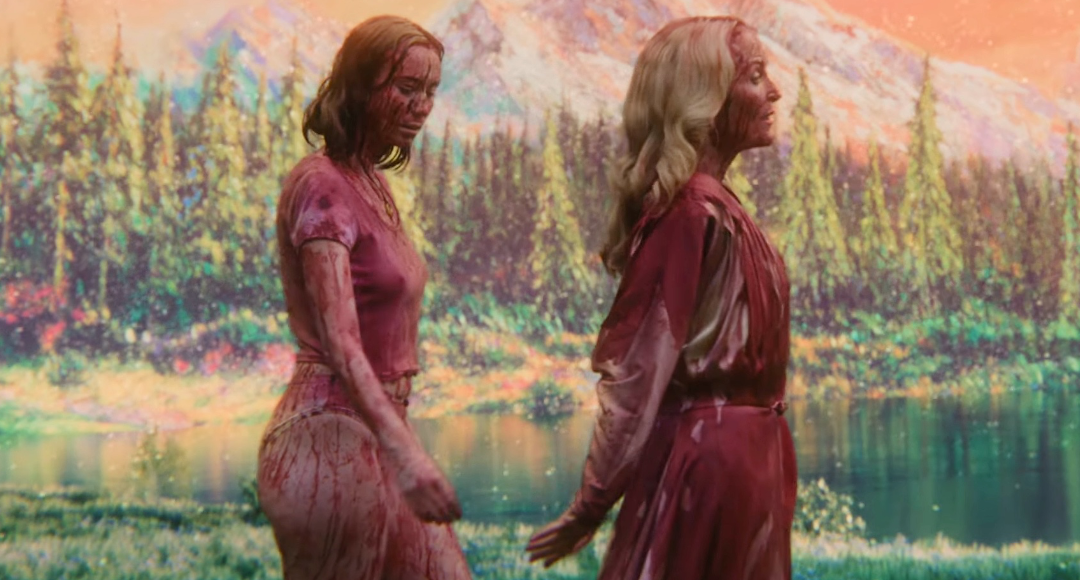
Jane Schoenbrun was never going to make a slasher that simply counted bodies.
With Teenage Sex and Death at Camp Miasma, the I Saw the TV Glow filmmaker transforms one of horror’s most scrutinized subgenres into a deeply personal meditation on identity, sexuality, shame, and the stories we inherit from the movies that shape us. It’s both a loving homage to the summer camp slasher and a sharp deconstruction of its legacy, interrogating decades of misogyny, repression, and phallic symbolism without ever stripping away the visceral pleasures that made the genre iconic.
The film follows Kris (Hannah Einbinder), an acclaimed queer filmmaker whose singular voice has earned her the opportunity of a lifetime: rebooting the legendary ‘80s slasher franchise Camp Miasma, a cornerstone of the summer camp horror boom. Before cameras can roll, however, the studio asks her to secure the return of the original film’s Final Girl.
That mission leads Kris back to the abandoned camp where the original was shot, now home to the reclusive Billy (Gillian Anderson), who has spent years distancing herself from both the franchise and the mythology surrounding it. What begins as a business meeting gradually evolves into an intimate conversation between two women wrestling with trauma, legacy, and the complicated relationship between horror and personal identity.
Schoenbrun wisely keeps the focus on these emotionally charged exchanges, but never forgets that Camp Miasma is, at its core, a slasher. Through clever film-within-a-film sequences, we’re treated to glimpses of the original movie, complete with outrageous practical gore, gleefully excessive kills, masked terror, and all the exploitation excess that defined the genre’s golden era. Those moments don’t exist simply as nostalgic fan service—they become part of the larger conversation, allowing Schoenbrun to examine why these films continue to resonate decades later.

Rather than rejecting slasher conventions, Teenage Sex and Death at Camp Miasma reclaims them. The bloody murders, late-night campfires, hormonal teenagers, chase sequences, and unmistakable summer camp atmosphere are all present, but they’re filtered through a contemporary lens that asks what these stories have always been trying to say beneath the bloodshed.
Once again, Jane Schoenbrun proves they’re one of the most singular and essential voices working in genre cinema. Their films aren’t designed for mass appeal or opening weekend box office dominance. They’re the kind of movies that demand to be revisited, dissected, and passionately debated—the very definition of future cult classics.
Leave a Reply